How an Exhibition Catalogue Became One of Photography’s Greatest Photobooks
Beyond the Exhibition
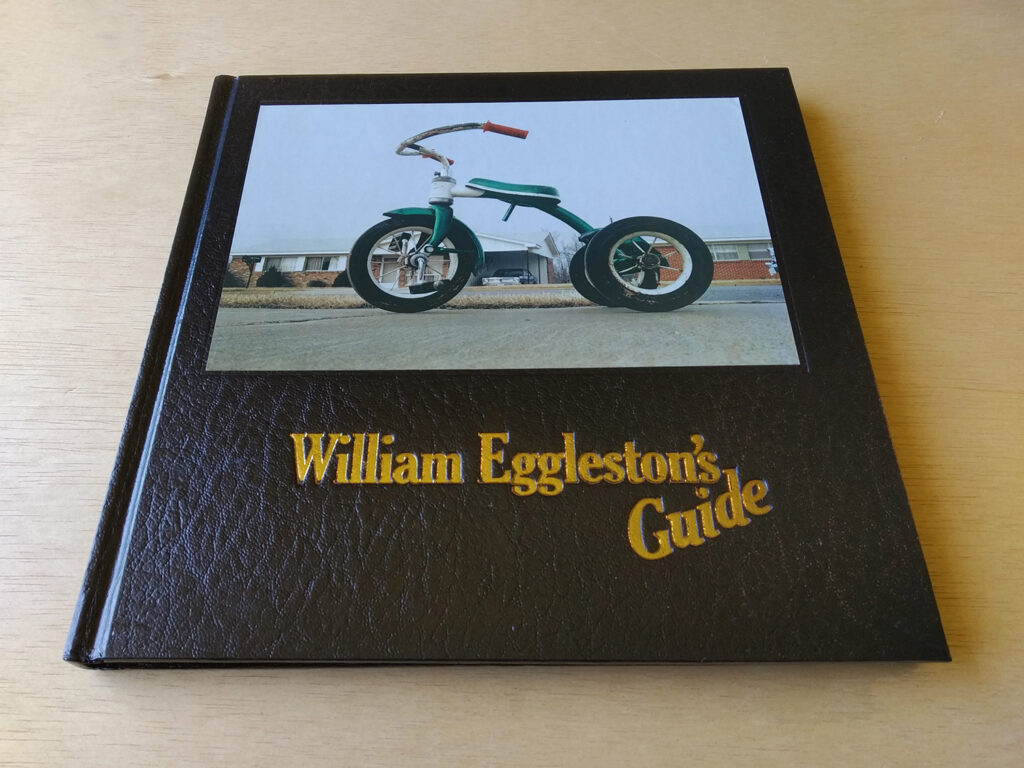
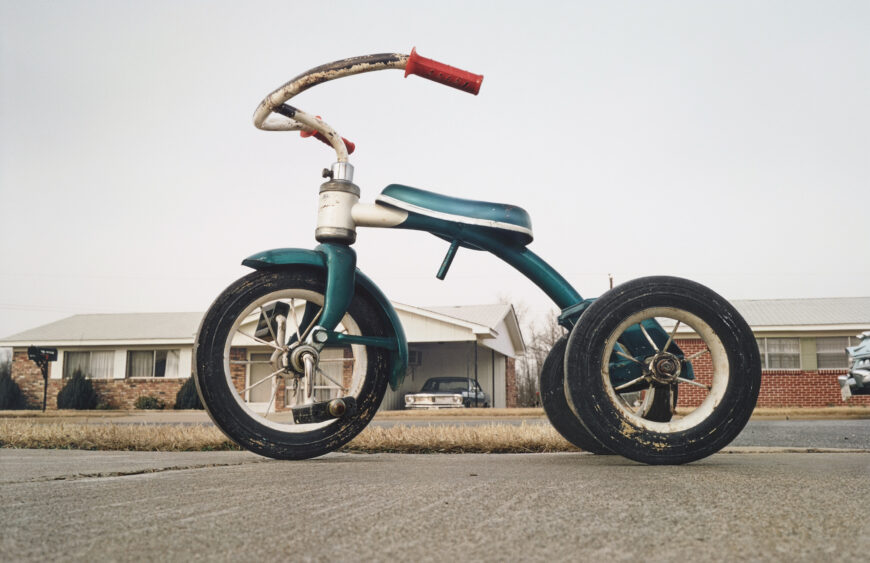
When William Eggleston’s Guide was published in 1976, its purpose was straightforward: to record Eggleston’s first solo exhibition at the Museum of Modern Art. History, however, had other plans. Today, the book is the primary way photographers experience his work, standing independently of the event that produced it.
This reversal is significant, as most exhibition catalogues eventually become static historical documents. Guide escaped that role, transitioning from a record to a communicative experience. The distinction is subtle but vital: while a catalogue documents, a photobook creates a lasting narrative journey.
Looking at Pictures or Reading a Book?
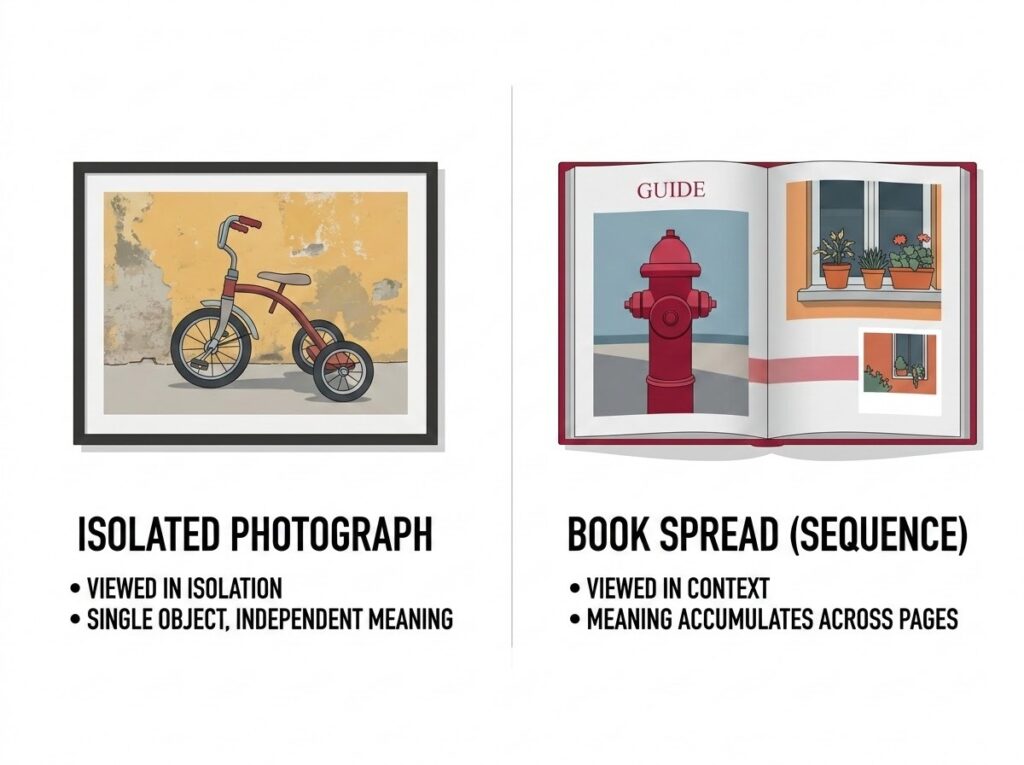
Most people encounter photographs in isolation, whether on gallery walls or social media. Photobooks ask something different, unfolding through sequence rather than isolation. Every photograph gains meaning from the images surrounding it; turning a page becomes part of the narrative itself, with colors and motifs echoing across spreads.
This is precisely what makes Guide remarkable. Its photographs are arranged to create relationships beneath the surface. A patch of red introduced early quietly returns pages later, and interiors dissolve into exteriors with ease. Reading Guide feels less like browsing a portfolio than listening to a complex musical composition.
Editing Is an Act of Authorship
Editing is often misunderstood as a simple process of elimination to improve quality, but Eggleston suggests something more profound. It is about discovering how photographs speak to one another. Individually, many images in Guide appear understated or even awkward, yet they acquire unexpected resonance within the sequence.
A quiet photograph often prepares the reader for the next bold image or establishes recurring forms that bind distant sections together. This is editing as composition. Just as a writer arranges paragraphs into an essay, Eggleston arranges photographs into a coherent visual thought that demands engagement.
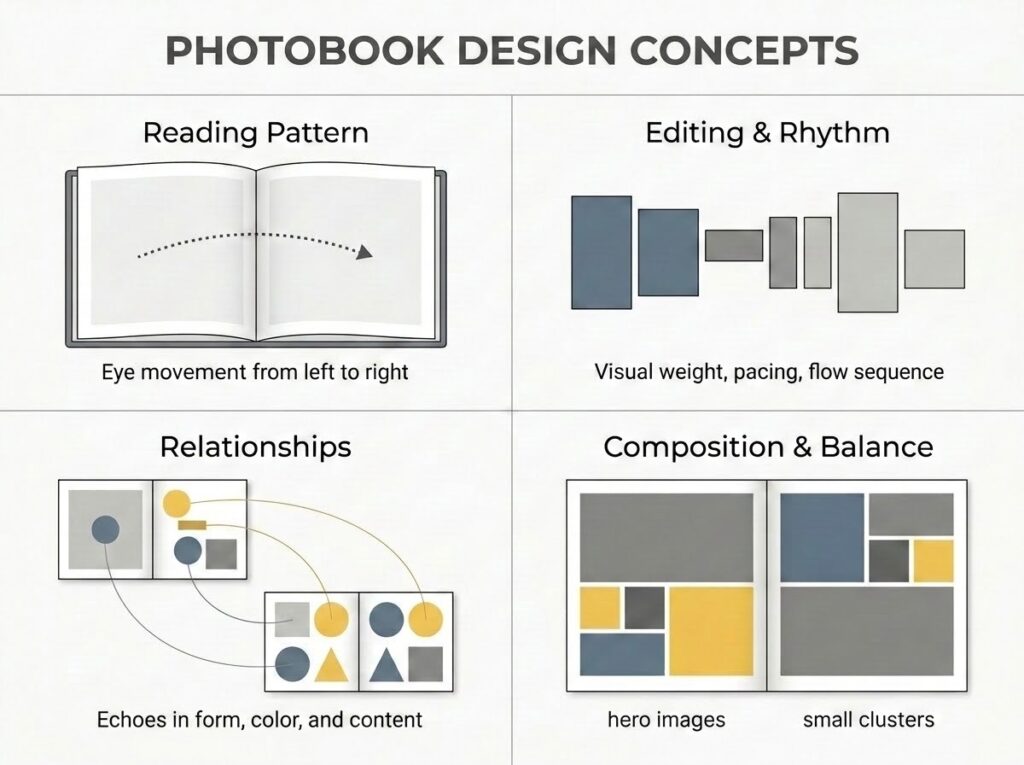
| Photobook Spread Layout | |
| Reading Pattern | Left-to-right eye movement and narrative progression. The act of turning the page creates a pause, amplifying the visual impact of each subsequent spread. |
| Editing & Rhythm | Image sequences, pauses, and variations create flow that turns images into a narrative statement. |
| Relationships | Echoes in color, form, and content across the sequence. |
| Composition & Balance | Image placement, coordination, composition strategies, and visual variations. |
The Rhythm of Seeing
One of the most overlooked qualities of Guide is its pacing. While contemporary books often feel anxious, competing to impress on every page, Guide understands that rhythm depends on variation. Quiet photographs create pauses that allow stronger images to resonate more deeply, mirroring the natural rise and fall of attention in everyday life.
Colour Across the Page
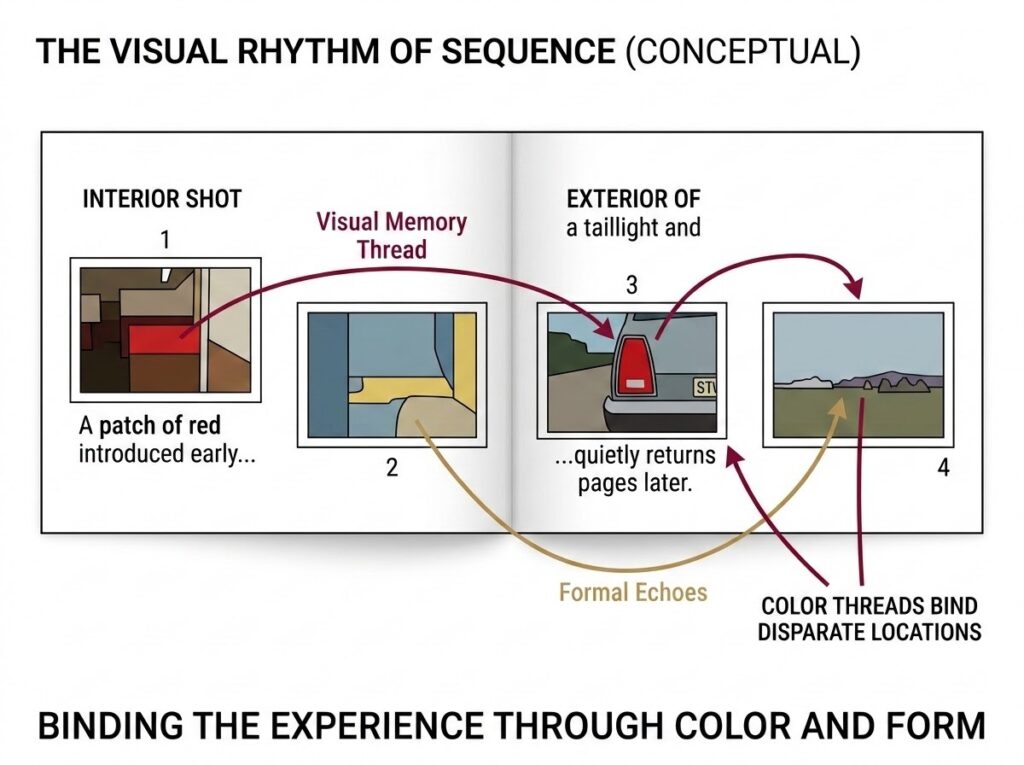
While much is written about Eggleston’s use of color in single images, Guide reveals color as a study in visual memory. A deep crimson encountered early lingers, connecting to later tones instinctively. Color becomes the thread that binds disparate locations together, ensuring the book improves with repeated, familiar readings.
Why the Book Still Feels Contemporary
Nearly fifty years later, Guide feels remarkably current because it asks us to slow down in an age of digital speed. It reminds us that photography is capable of richer conversations when allowed to exist in sequence. A memorable work is built upon relationships and rhythm, where meaning accumulates gradually rather than through isolated fragments.
Lessons for Photobook Makers
The soul of a photobook lies in sequencing and restraint. Guide trusts the intelligence of its readers, communicating through juxtaposition rather than lengthy captions. This editing process is not merely the final stage of production; it is the exact moment a collection of photographs becomes a coherent, impactful work of art.
Returning to Guide
It is easy to see why Guide occupies such an important place in history, influencing generations of photographers from Stephen Shore to Alec Soth. Yet it continues to matter because it is more than a historical guide; it is a guide to looking itself. Nearly fifty years later, its lesson that photography continues through the slow experience of reading remains vital.