Halfway to Ten
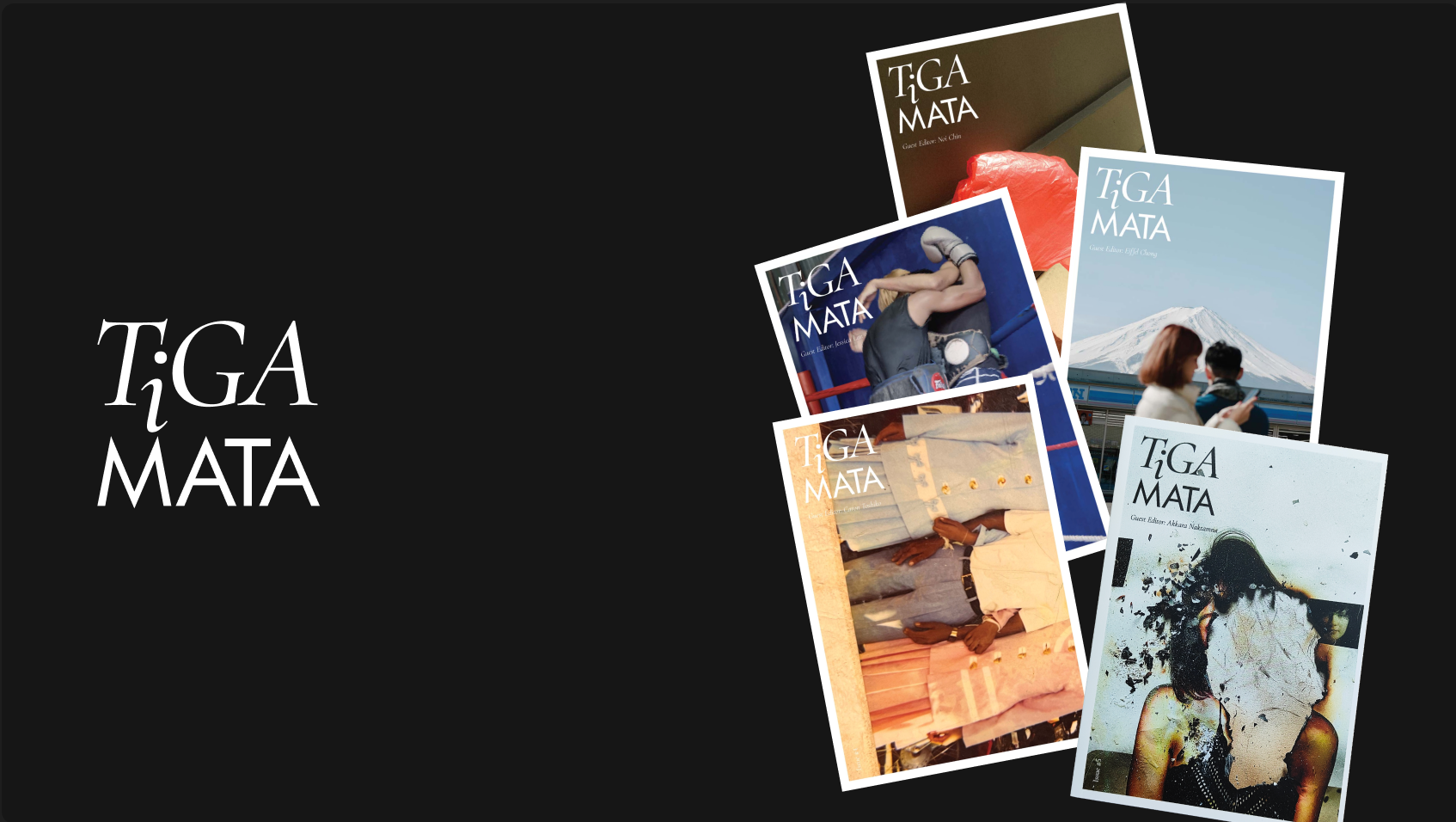
With the launch of Tiga Mata Issue #5: Truth Flux, we find ourselves at an important milestone.
When we started Tiga Mata in 2024, we made a simple promise to ourselves: no matter what happened, we would not stop until we reached Issue #10.
At the time, ten issues felt ambitious. Independent publishing often requires equal parts conviction, patience, and persistence. Every issue demands time, resources, trust, and collaboration. There are always questions about sustainability, relevance, and whether the conversations we create will find their audience.
Today, as we launch our fifth issue, we have reached the halfway point of that journey.
Looking back, what stands out most is not the number of issues we have published, but the conversations that have emerged along the way.
Five Issues, Five Questions
Tiga Mata was never intended to be a publication about photography technique or equipment. From the beginning, we were interested in photography as a way of thinking about ourselves, our communities, and the world around us.
We envisioned Tiga Mata as a platform for contemporary photography in Southeast Asia. A space where photographers, artists, writers, and thinkers could engage with the questions, concerns, and realities of our time through images and dialogue.
Each issue begins with a question proposed by a guest editor. What follows is an invitation for photographers across Southeast Asia to respond through their own experiences, perspectives, and practices.
Looking back at the first five issues, a pattern begins to emerge.

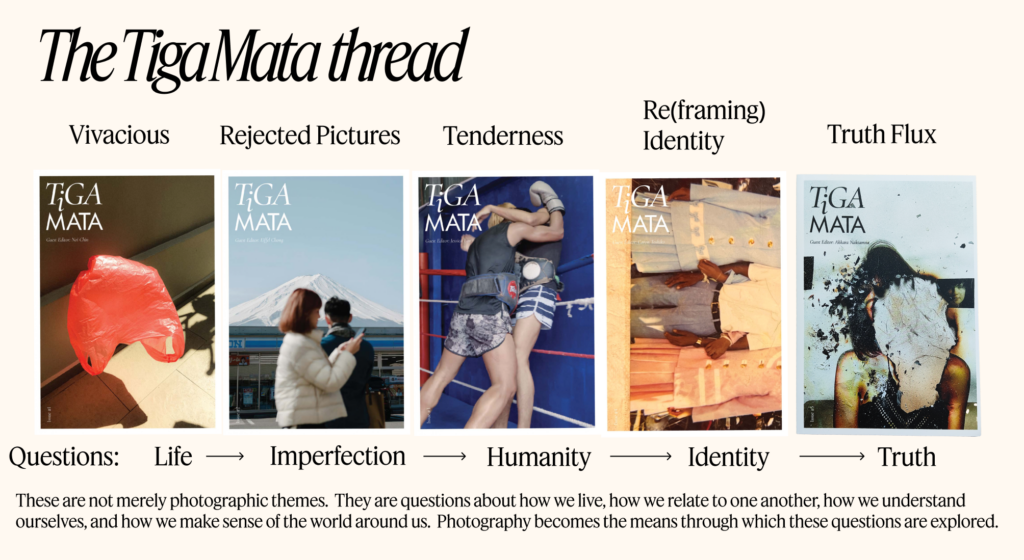
Issue #1: Vivacious
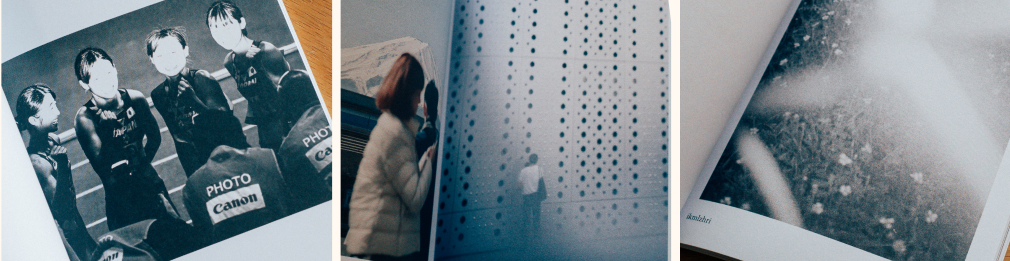
Our first issue was a celebration of life in its many registers—energy, curiosity, joy, enthusiasm. But vivacity wasn’t only spectacle. A lot of the work found it in stillness, in ordinary attention. The photographs suggested something simple and easy to forget: making pictures often begins with noticing.
Issue #2: Rejected Pictures
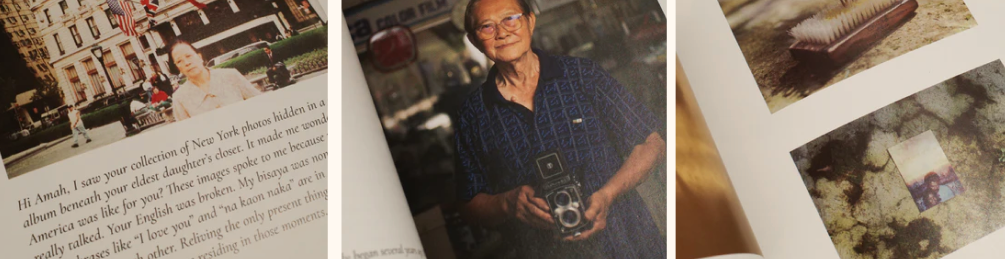
For the second issue, we asked photographers to return to the images they’d set aside—the blurry frames, the accidents, the pictures that first felt like failures. What came back was a reminder that meaning can arrive late. An image once discarded can become personal, historical, even necessary. The issue pushed against tidy ideas of perfection and success.
Issue #3: Tenderness
Guest edited by Jessica Lim, Tenderness turned toward care, gentleness, and love. In a climate of uncertainty and division, the issue lingered on the small gestures that keep people going. Photography’s capacity to hold a moment made room for connection, healing, and hope—the parts of being human worth protecting.
Issue #4: Re(frame) Identity
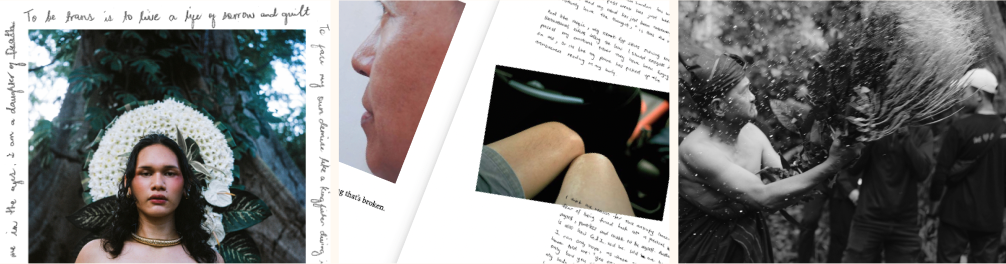
Guest edited by Caron Toshiko, Re(frame) Identity treated identity as something layered and unfinished. Through family histories, migration, archives, embodied memory, and lived experience, contributors looked at how identity is inherited, contested, and remade. The question wasn’t only who we are, but who we are becoming.
Issue #5: Truth Flux
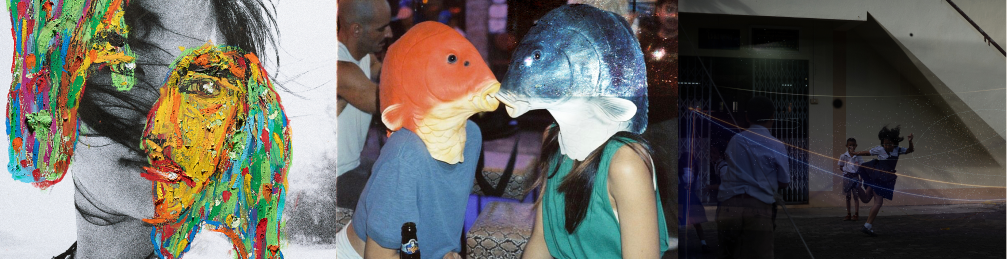
Guest edited by Akkara Naktamna, our latest issue turns to photography’s uneasy relationship with truth. The medium has long been linked to evidence and authenticity; contemporary practice keeps undoing that certainty. Truth Flux sits in the overlap of fact and fiction, memory and invention. Here, photography is less a clean record of the world than a way of questioning, rebuilding, and reimagining it.
A Larger Conversation
On their own, these themes can look scattered. Read as a sequence, they start to ask related things.
Vivacious asked us to celebrate life.
Rejected Pictures asked us to rethink value.
Tenderness asked us to stay with compassion.
Re(frame) Identity asked us to examine the self.
Truth Flux asks us to question what is real.
Life. Value. Humanity. Identity. Truth.
These are not just photographic themes. They are questions about how we live with one another, how we understand ourselves, and how we make sense of the world. Photography is the means; the inquiry is larger.