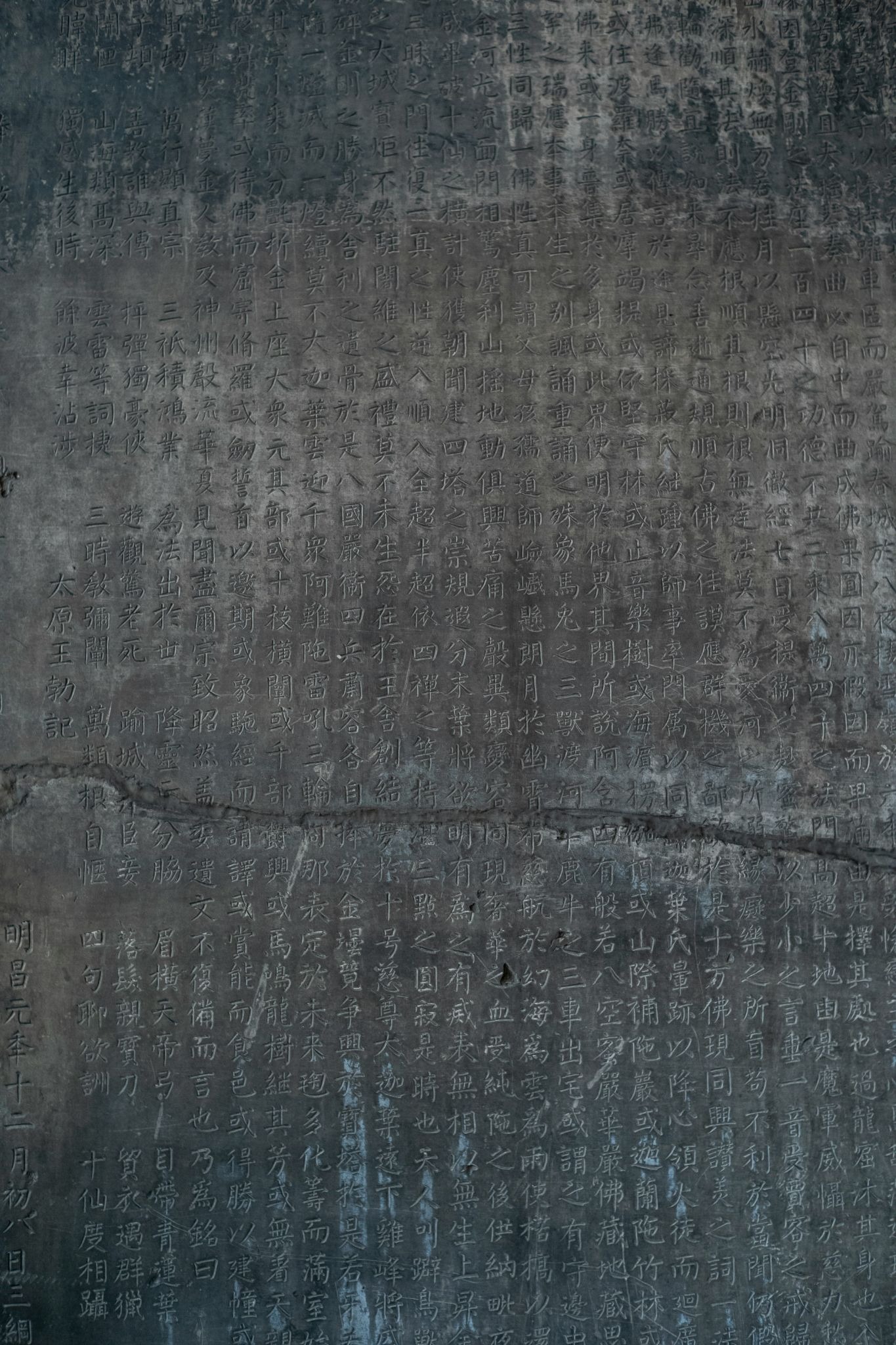
(Ancient stone tablet with carved chinese calligraphy, Photo by tommao wang on Unsplash)
There is an old test for writing a haiku. It has nothing to do with syllables.
Write something a person a thousand years from now would understand at once—without footnotes, without the scaffolding of your own era. Leave out the brands, the headlines, the tools that may not survive you.
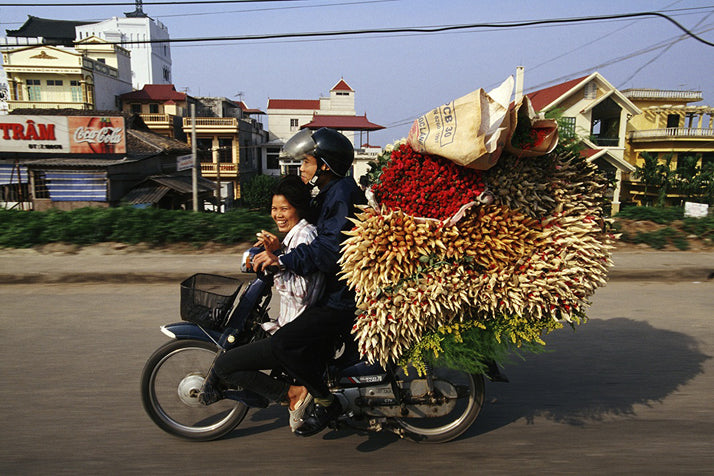
That is the point. Imagine someone from the past arriving today and asking you out for a Coke. The line is trapped in its moment. A thousand years on, Coca-Cola may be gone—killed by health scares, replaced by whatever fills every fridge instead. Write from that kind of certainty and the words expire with it. Write past it, and they last.
It sounds simple. It rarely is.
Most of what we make leans on the moment it was made in, whether it’s words or pictures. We reach for what’s around us because it’s close and easy to point to. The hard part isn’t finding something to say. It’s saying it in a way that doesn’t need the year printed underneath.
The same test applies to images. A picture full of the visible props of its decade, a particular phone, a particular haircut, a particular slogan on a wall, ends up reading as a document of that decade and little else. It has a shelf life built in. The images that keep working long after the props go out of fashion are doing something different. They’ve found the thing underneath the moment, the part that doesn’t belong to any one year.

(An old phone booth sitting on the side of a street, Photo by Peter Conrad on Unsplash )
There’s a quieter benefit too: getting out of your own head.
It’s easy to sit inside your own thoughts and mistake that for understanding something. Writing a line built to survive a thousand years forces you out. You can’t lean on shared references, inside jokes, or the assumed context of your own moment. You have to find what’s actually there, stripped of everything that only means something to you and the people around you right now.
The same question sits underneath more technical ideas too. Reducing a subject to the one detail that’s truly its own, rather than something generic like height. Making sure a figure separates cleanly from its ground. Strip away the craft language and it’s the same test as the haiku: what’s left once you take away everything that’s only true today.
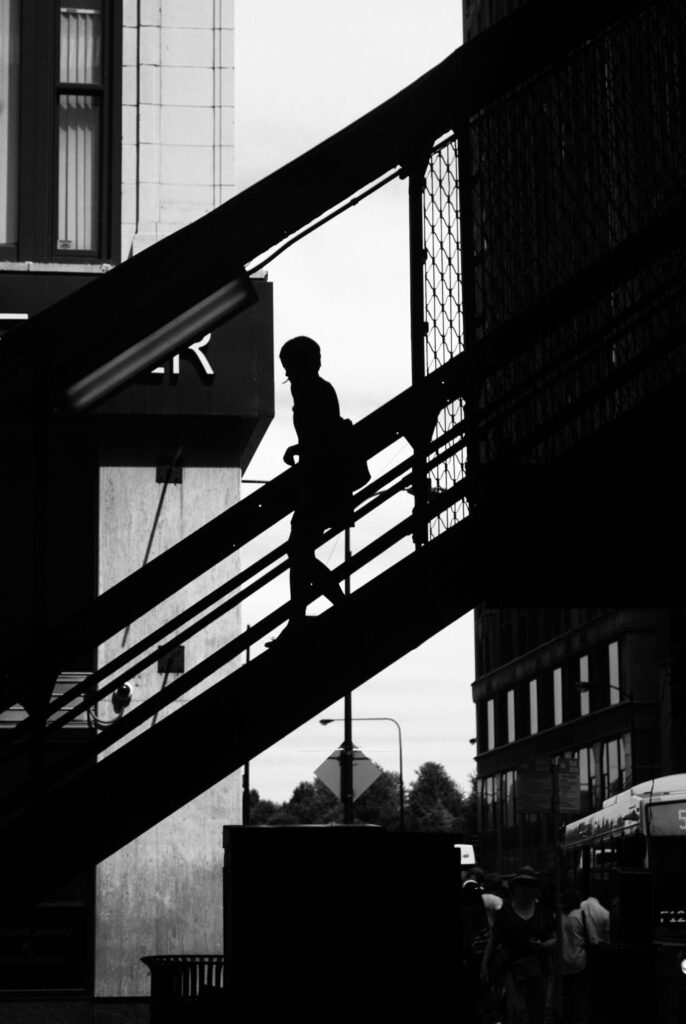
(Silhouette photo of a person walking down on stair, Photo by Sara Aho on Unsplash)
None of this is an argument against making work about the present. Street photography especially is made in the middle of it, among people going about an ordinary day, sitting in doorways, waiting at a table. The point isn’t to avoid your own time. It’s to notice what in a scene will still mean something once your own time is gone, and build the image around that instead of around whatever will date fastest.
It’s a strange thing to ask of anyone before they’ve even picked up a camera or a pen. But it reframes the whole exercise. Every photograph, every piece of writing, is already a small bet against forgetting. The haiku test just makes you answer, up front, what exactly you’re betting will still be worth remembering.