On Quietness, Books, and Things We Carry Home
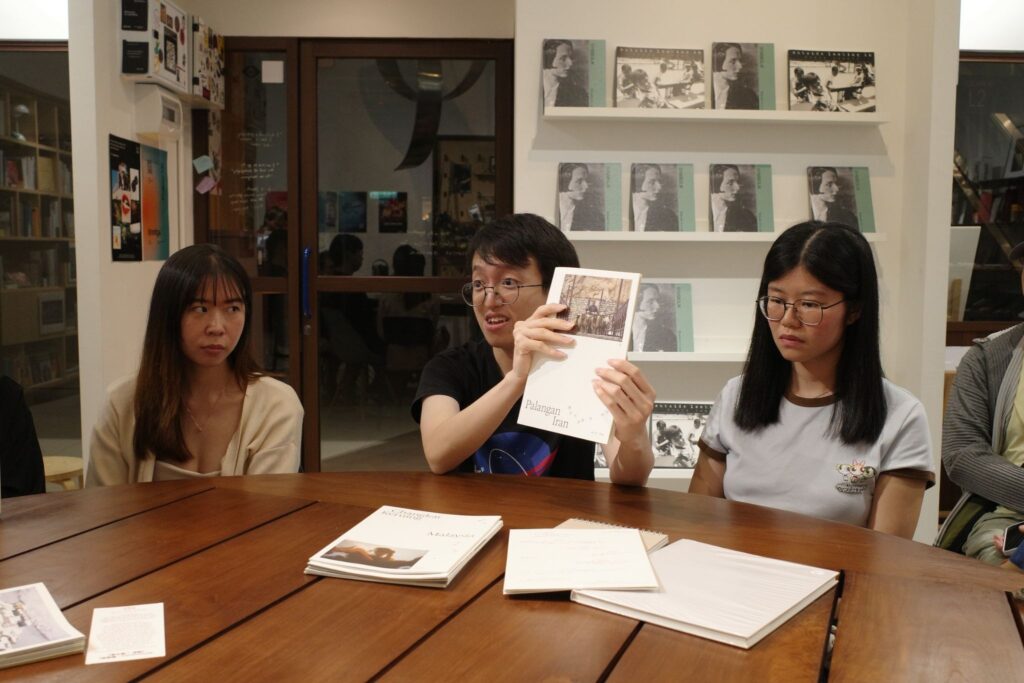
For the past few months, a small group of people have been gathering at Zontiga once every month to sit around photobooks. Not to review them formally, analyse camera settings, or talk about gear, but simply to spend time with photographs together.
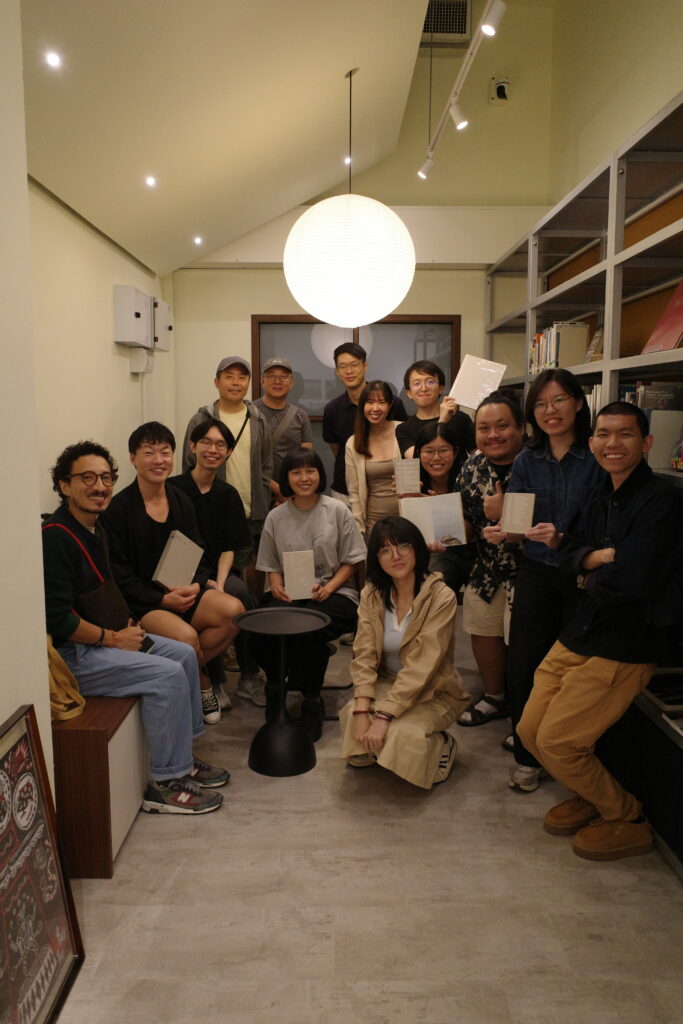
The conversations often drift toward design, loneliness, travel, memory, printing, sequencing, or why certain images stay in our heads longer than others. Around the table are photographers, designers, illustrators, students, people who mostly look at books, and people who are still trying to figure out why they are drawn to photography in the first place.
The sessions are called Reading Photographs.
For the first few gatherings, we never thought about documenting anything. The conversations felt too loose, too fleeting, perhaps even too difficult to translate outside the room. But somewhere between the fourth and fifth session, we realised these evenings were slowly becoming something else: a growing collection of shared observations around photographs, books, and ways of seeing. These notes are less a summary than an attempt to leave a few traces behind.
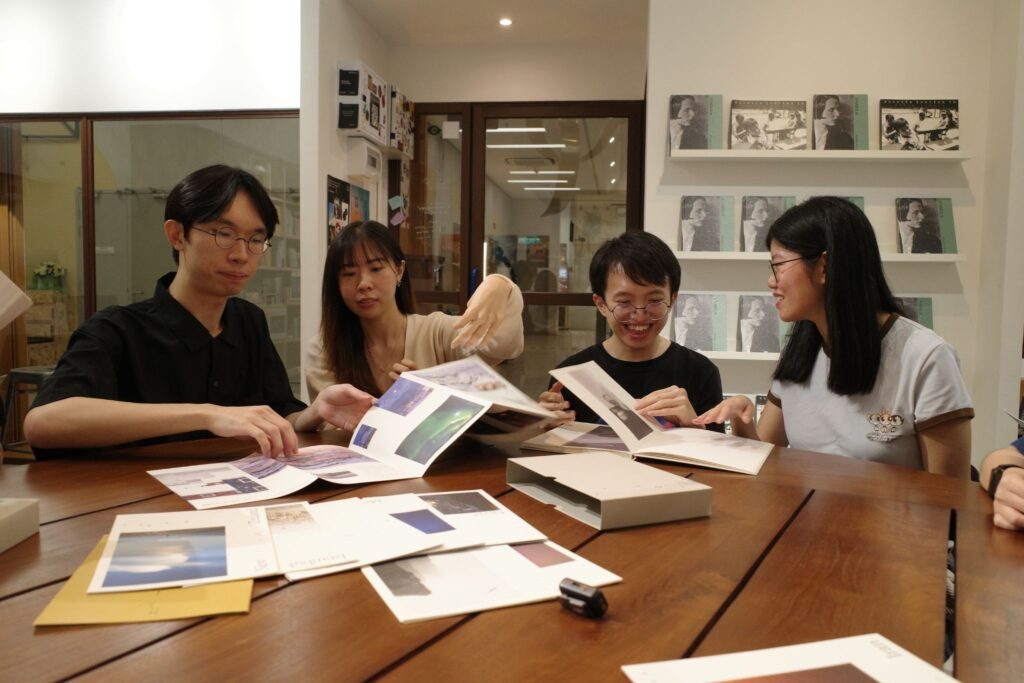
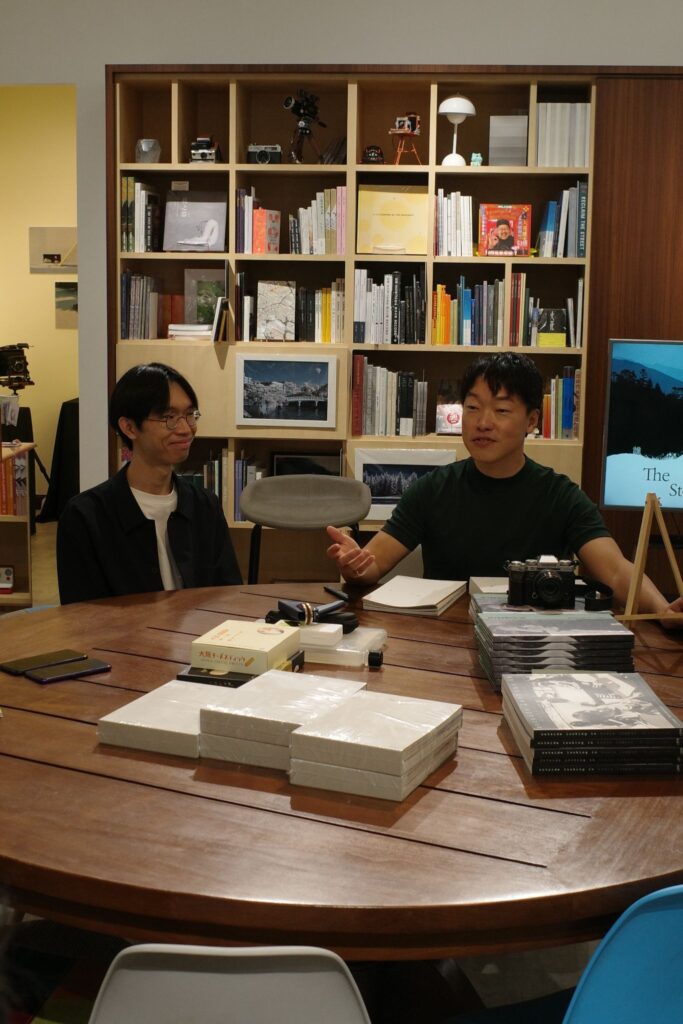
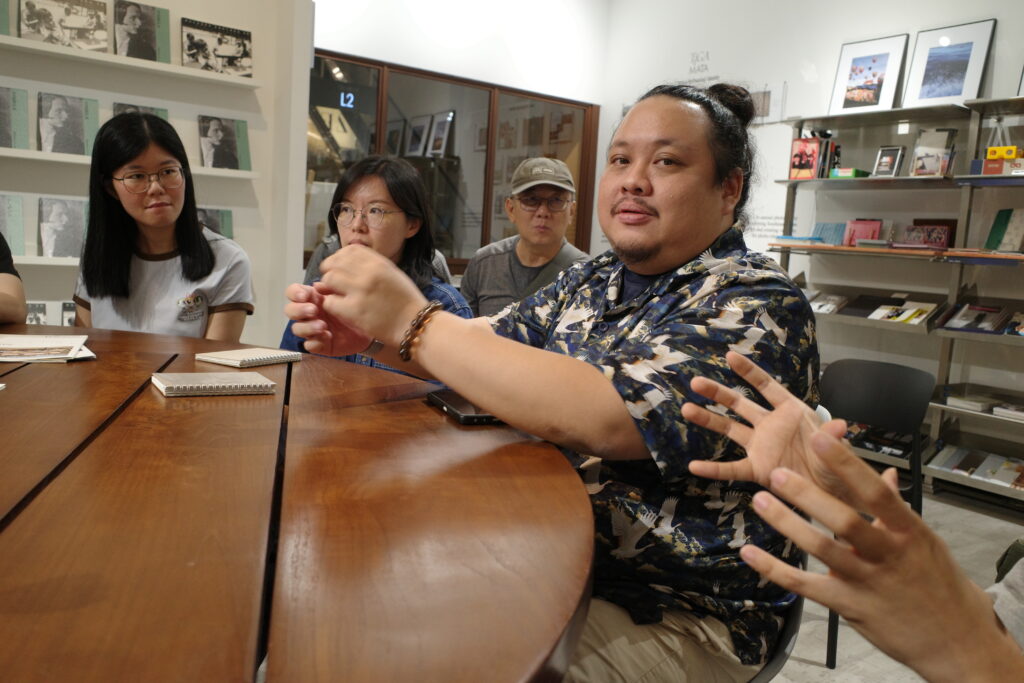
This session felt different from the previous ones. For the first time, all three featured photobook authors were present in the room alongside participants, creating an opportunity for readers and makers to share the same conversation.
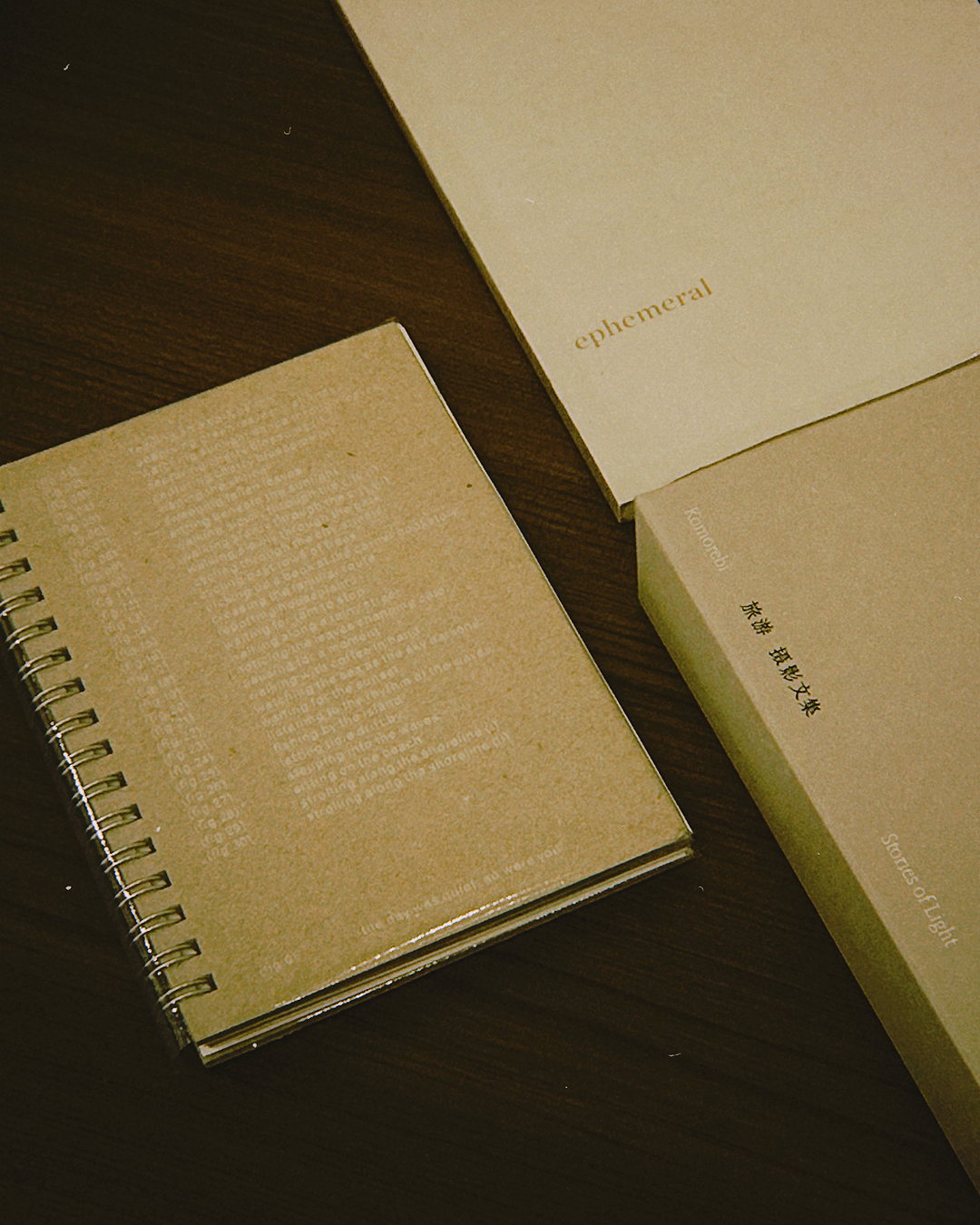
The evening revolved around three books: The Day Was Quiet, So Were You by Wai Lun Lee, Komorebi: Stories of Life by Ling Doh Kin, and Ephemeral by Esther Chung. Although very different in form and tone, the three books quietly orbited similar ideas: slowness, solitude, emotional space, memory, and the attempt to hold fleeting moments a little longer.
Wai Lun Lee’s The Day Was Quiet, So Were You unfolded like a small sketchbook of stillness. Filled with solitary figures, distant gestures, empty spaces, and moments of pause, the book carried an intentional simplicity that many participants kept returning to throughout the evening. Its compact notebook-like format reinforced that sense of restraint, making the work feel intimate rather than monumental.
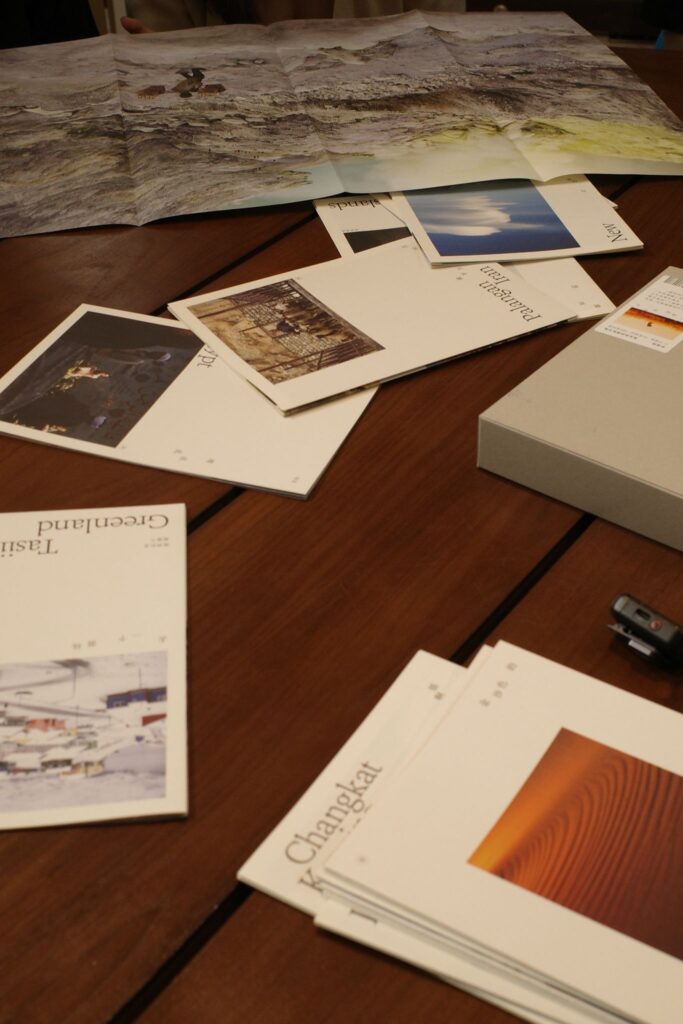
Ling Doh Kin’s Komorebi: Stories of Life approached the photobook very differently. Rather than a conventional bound publication, it exists as a collection of loose printed sheets, each chapter representing different places, encounters, and fragments collected through travels across seventeen countries. Photography, writing, mythology, and illustration move freely together, making the experience feel less like reading a book and more like unfolding pieces of a journey.
Meanwhile, Esther Chung’s Ephemeral separated text and image into two independent yet connected volumes. Part diary and part visual reflection, the work explored disappearance, memory, emotional fragility, and the quiet interior spaces people carry within themselves. Several participants remarked that separating the words from the photographs allowed each to breathe without competing for attention.
What followed was neither a sharing session nor a critique. Instead, it felt like a room full of people trying to describe feelings they normally do not have words for. Participants spoke about the difficulty of leaving empty space inside a book, about photobooks as emotional objects rather than collections of images, and about how certain photographs seemed to carry “a quiet courage.” One participant compared a book to carrying a small first-aid kit for difficult days in the city.
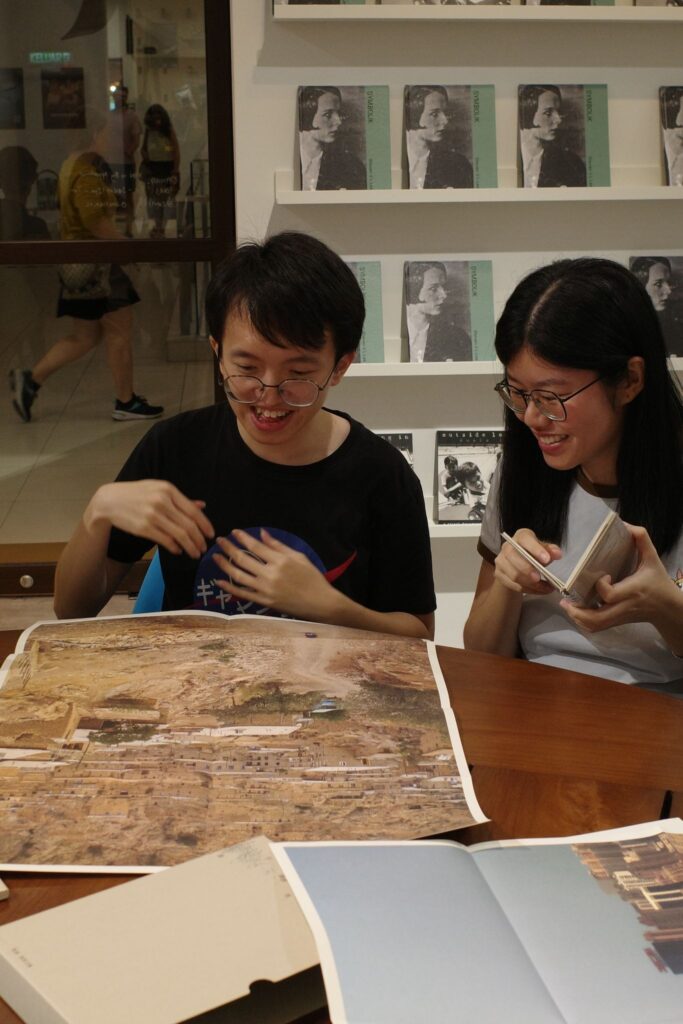
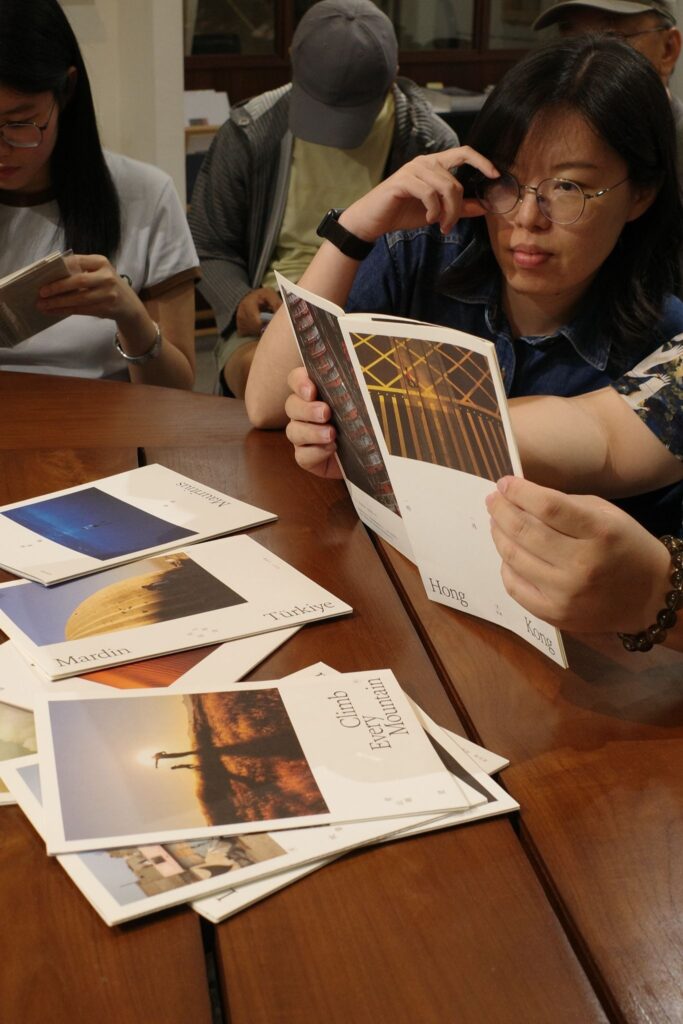

Again and again, the conversation returned to slowness. Not deliberately, perhaps, but almost inevitably.
Wai Lun described how his books emerged partly from exhaustion—from spending so much time processing information through commercial design work and wanting instead to return to quieter spaces, distant figures, empty landscapes, and solitary gestures. He spoke of his second book almost as if it were a sketchbook made from photographs rather than drawings.
Esther explained her decision to separate text and image into two volumes because she did not want either to overpower the other. Some participants saw the work as a diary, while others felt the generous empty spaces invited readers to quietly place their own memories within the pages.
Throughout the evening, Komorebi continued circulating around the table in loose sheets. People unfolded them slowly, passing them around like maps, newspapers, or fragments gathered from different journeys. One participant described the experience as “generous”—a work that never tried to explain everything at once, but trusted readers to make connections for themselves.
At one point, the conversation wandered toward Inuit mythology and the northern lights. Ling Doh Kin shared a story about auroras being seen as spirits of children playing football in the sky with walruses. Unable to photograph that feeling directly, he later collaborated with an illustrator to create an image bringing together characters and visual fragments from earlier chapters of the book. He described it simply as “a hidden ending.”
There were many smaller observations that lingered after the session had ended. Someone reflected that photobooks no longer need to behave like traditional books. Another spoke about how looking at photographs on paper feels fundamentally different from looking at them on screens. One participant admitted they often struggle to understand photography exhibitions, but found that books, especially those with writing, gave them a way to enter the work more slowly.
Perhaps the observation that stayed with us the longest came from one participant who quietly said:
“Maybe we are not only reading photographs. Maybe we are also reading ourselves through them.”
Perhaps that is what these gatherings are slowly becoming. Not discussions about photography alone, but shared exercises in attention—spaces where photographs become a way of talking about memory, experience, and the lives we carry with us. And maybe that is enough reason to continue leaving these notes behind.
Until the next Reading Photographs.
— Zontiga
Kuala Lumpur, May 2026